Mama, this is your invitation to stand in the Strength of Christ when Motherhood reveals just how much we need Him. Please enjoy this Devotional, carefully created for the everyday mother - a study created to reflect what scripture actually says, from a mother herself. This isn’t a formula for making motherhood easier, however, it is an invite to live clothed in His Armor daily.

Ephesians 6:10–18
There was a season when I didn’t realize how much of the atmosphere in my home was being shaped by the thoughts I was entertaining.
I love my husband. I adore my children. I love the life the Lord has entrusted to me. And yet, somewhere in the middle of the ordinary, beautiful, demanding rhythms of motherhood, I began noticing something in myself that I didn’t particularly like.
I was irritable.
The little interruptions felt bigger than they were. The questions came when I needed quiet. The messes seemed to multiply faster than I could clean them. Some days, even the smallest inconvenience could change the entire tone of my morning.
And it wasn’t always what happened that upset me. It was what I told myself about what happened.
Why does everyone need something from me?
Does anyone notice how much I do?
Why do I have to get everything?
I just need one minute without someone needing me.
Have you ever caught yourself having an entire conversation in your head that no one else knows is happening?
I could be washing dishes, tending to a child, or moving through the day’s responsibilities while silently building a case for why I was frustrated. One thought would lead to another, and before long, I wasn’t simply responding to the moment in front of me. I was responding to the story I had created around it.
And that story didn’t stay in my head.
It followed me into conversations with my husband. It changed the way I answered my children. It affected the patience I had to offer and the gentleness I wanted to give. Tension began to settle into moments that could have been ordinary, peaceful moments together.
I started to recognize something that was difficult, but freeing, to admit: my thoughts were helping create a pattern, and that pattern was shaping the atmosphere of my home.
My husband could feel the tension. My children could sense when Mama was on edge. Even when I hadn’t said much, my tone, my expressions, and the way I responded could communicate more than I intended.
I never wanted my children to feel as though they needed to tiptoe around my emotions. I never wanted frustration to become the language of our home or for my husband and me to grow accustomed to approaching one another defensively.
I wanted something different.
I wanted a home where grace was practiced, where peace could grow, where my children could bring their little hearts to me freely, and where my marriage was a place of partnership rather than tension.
But wanting to be different and understanding how to become different are two very different things.
I began to see that the Lord wasn’t only interested in the words coming out of my mouth. He cared about the thoughts I was rehearsing long before those words were ever spoken.
What was I believing? What was I dwelling on? What assumptions was I making about the people I loved? Was I allowing a difficult moment to determine the way I viewed my entire day?
And perhaps most importantly, was I relying on my own strength to change a pattern that needed to be brought before Him?
That is what makes the armor of God so meaningful to me.
Not because I have perfected my responses or because I never struggle with irritability. But because God has given us His Word, His truth, and His strength to help us recognize what is happening within us and learn to walk differently.
And I want to invite you into that conversation, too.
Because the armor of God isn’t only for the extraordinary battles we imagine when we hear those words. It is for the everyday moments in which we are being formed into the women God has called us to be.
A Morning at Toastique, and a Truth Worth Carrying Home
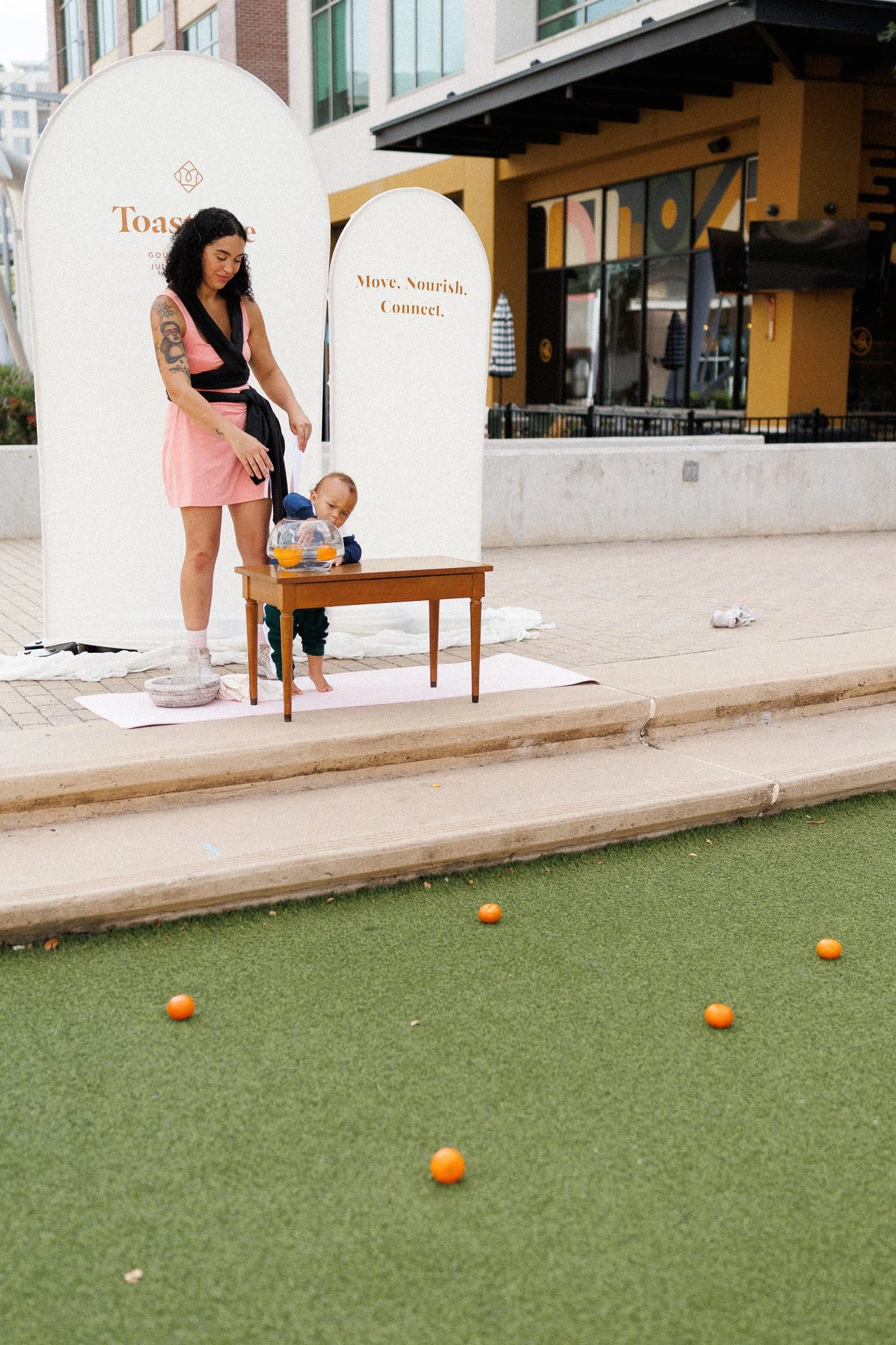
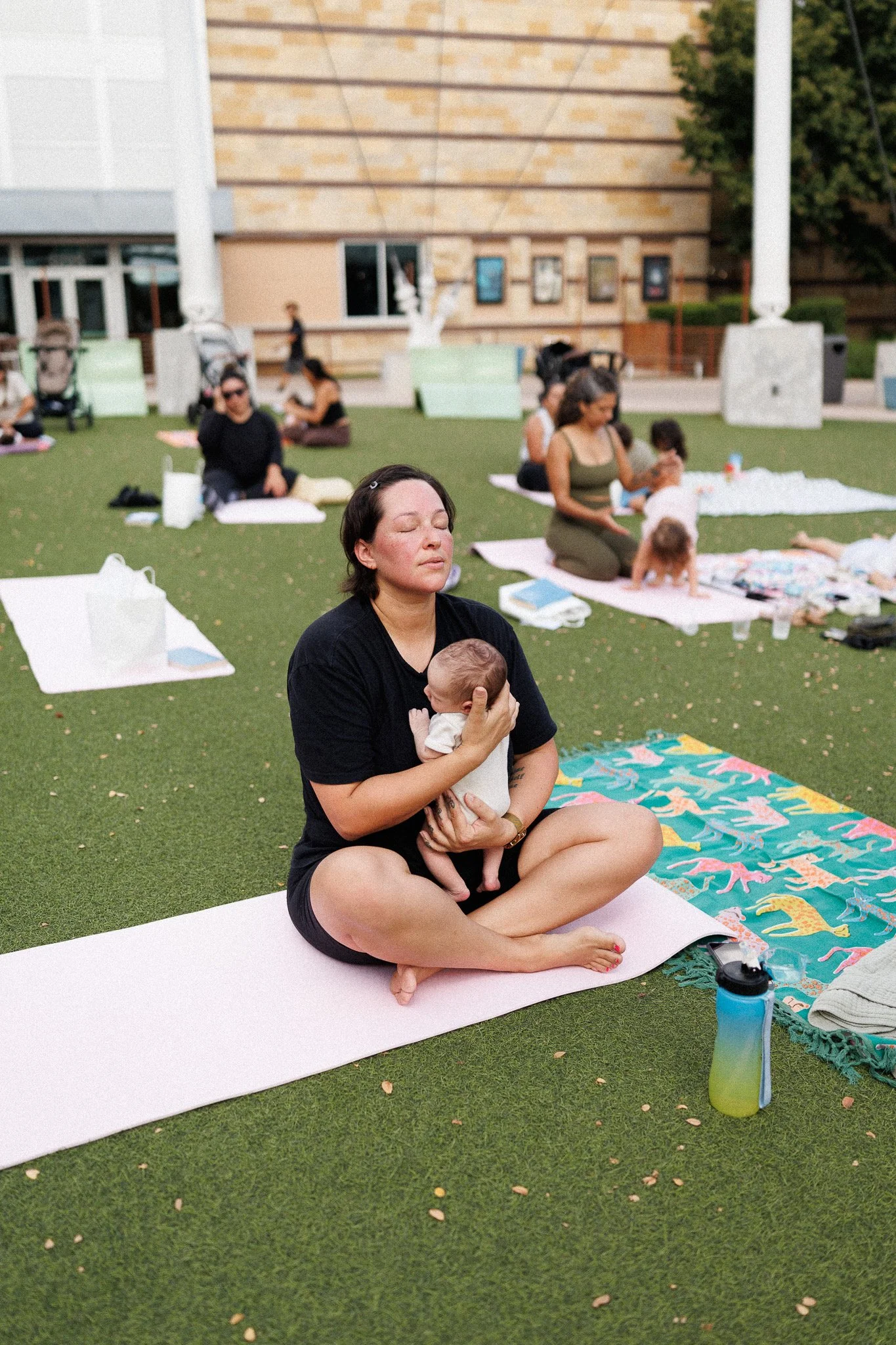
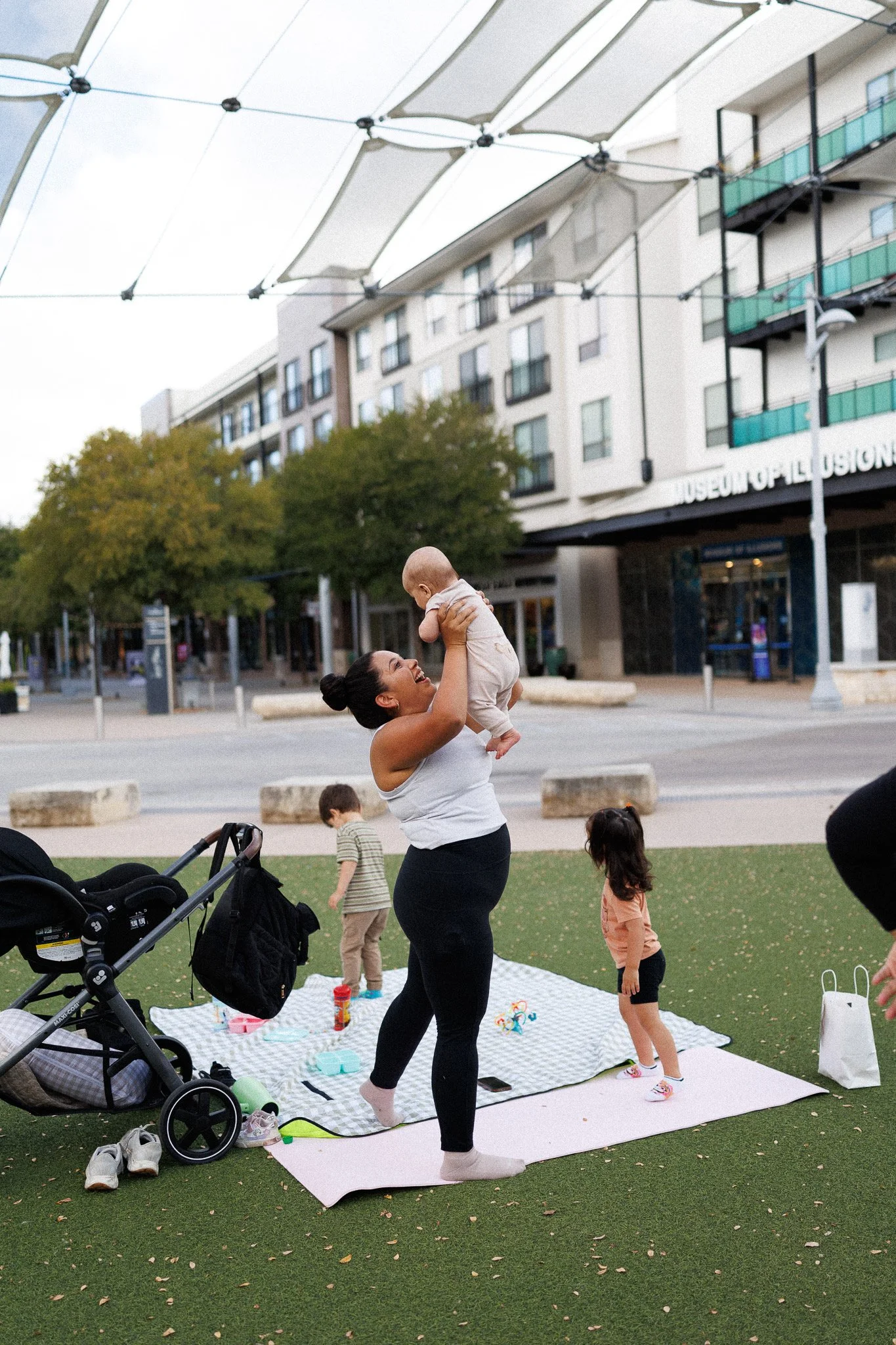
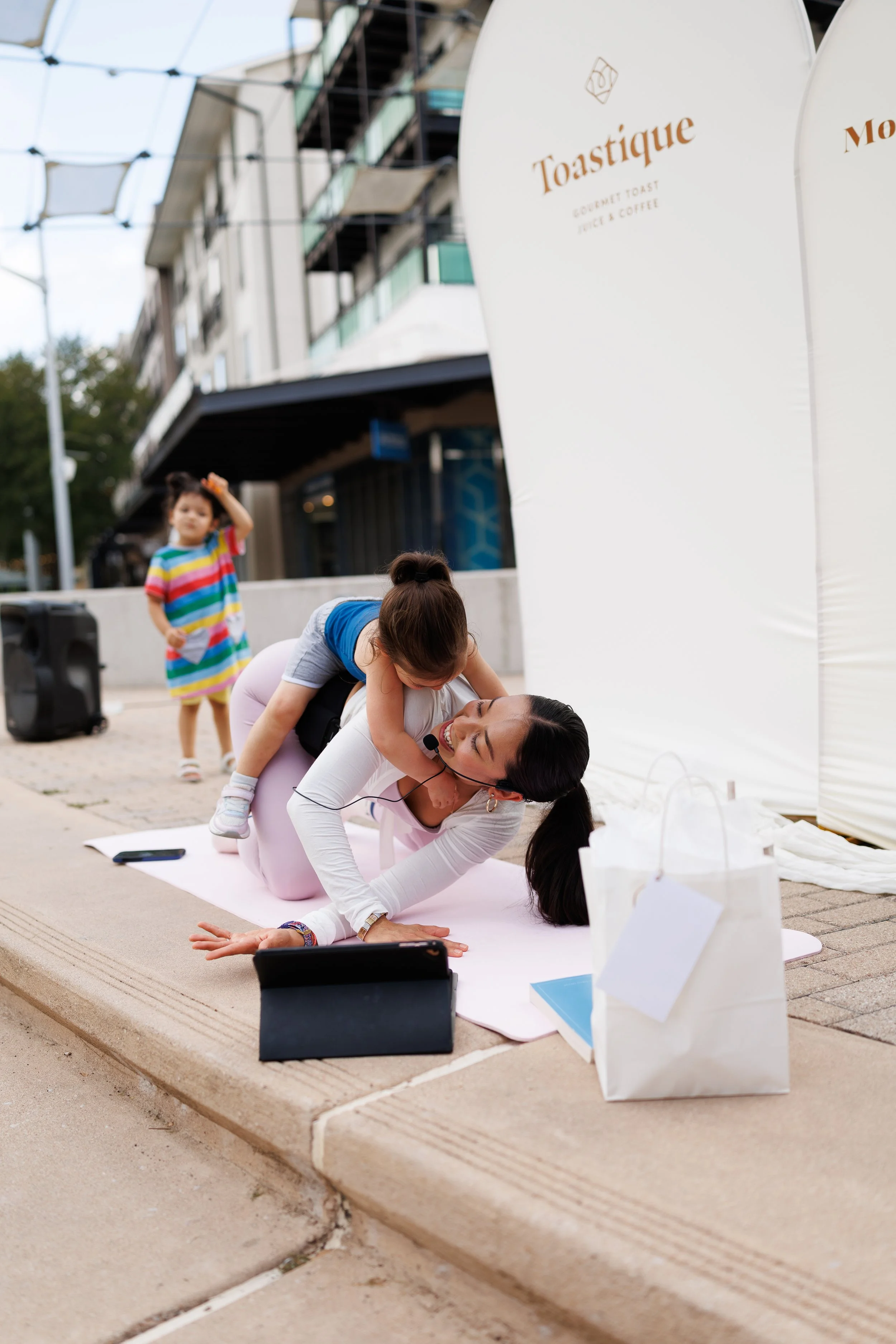
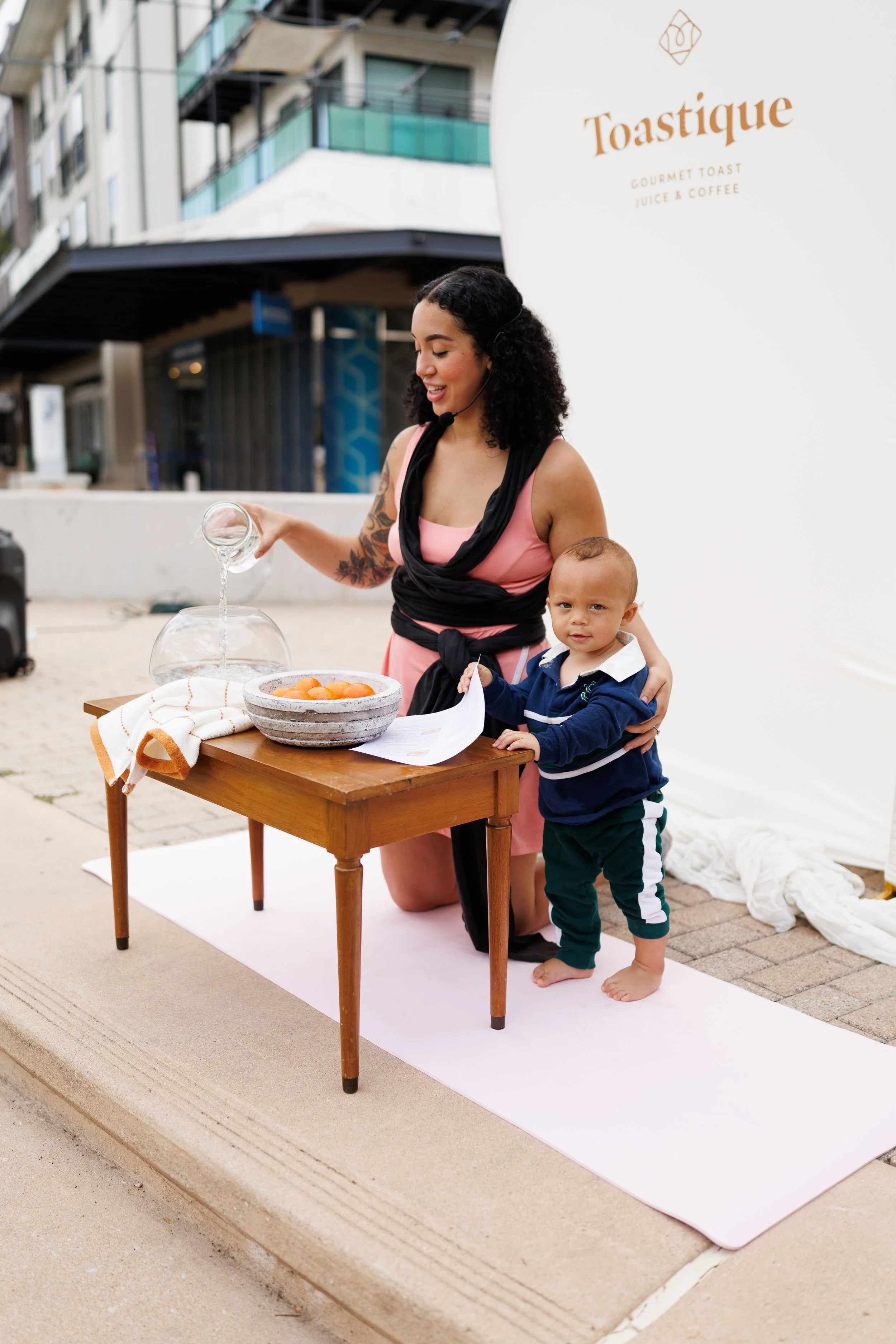
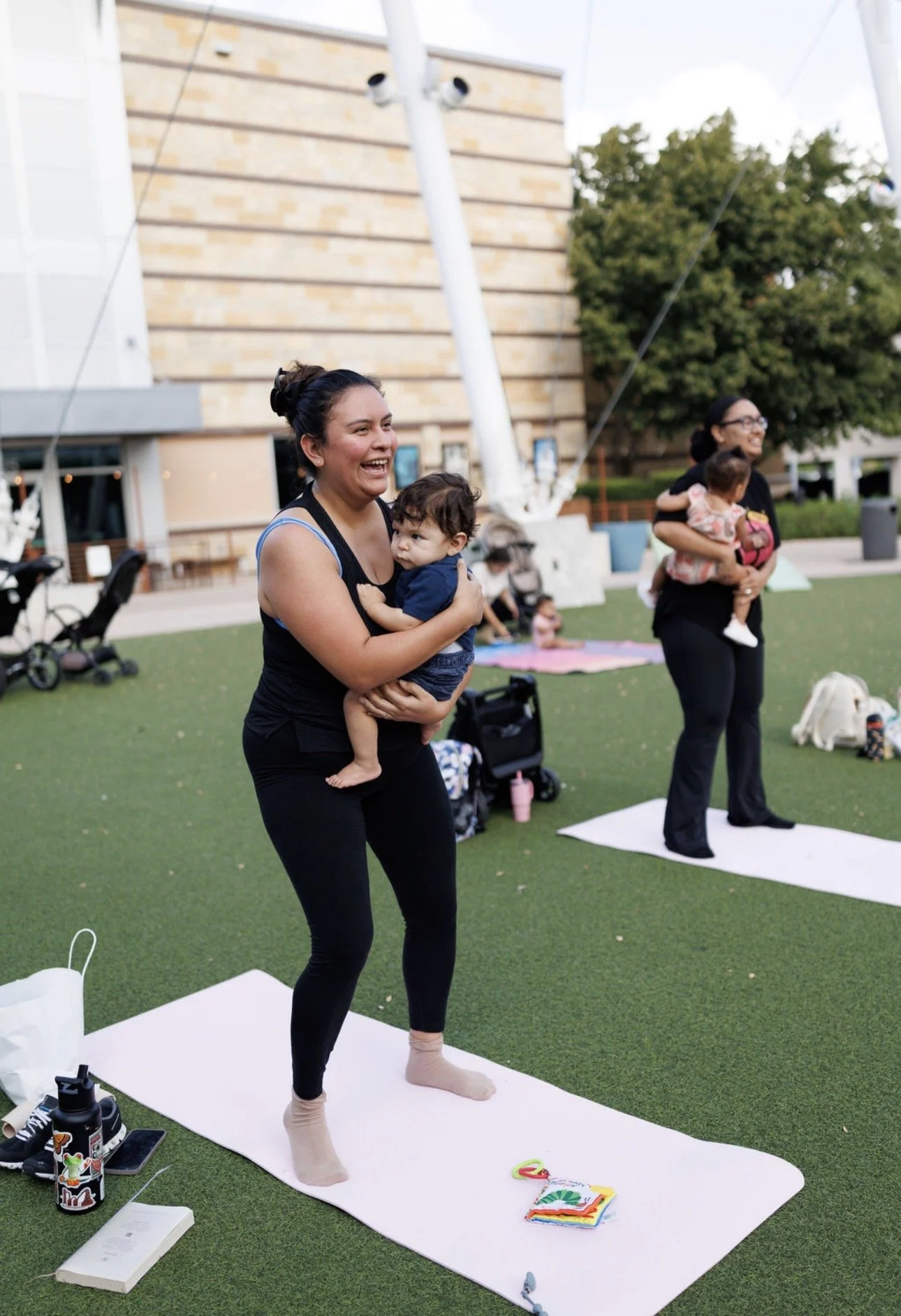
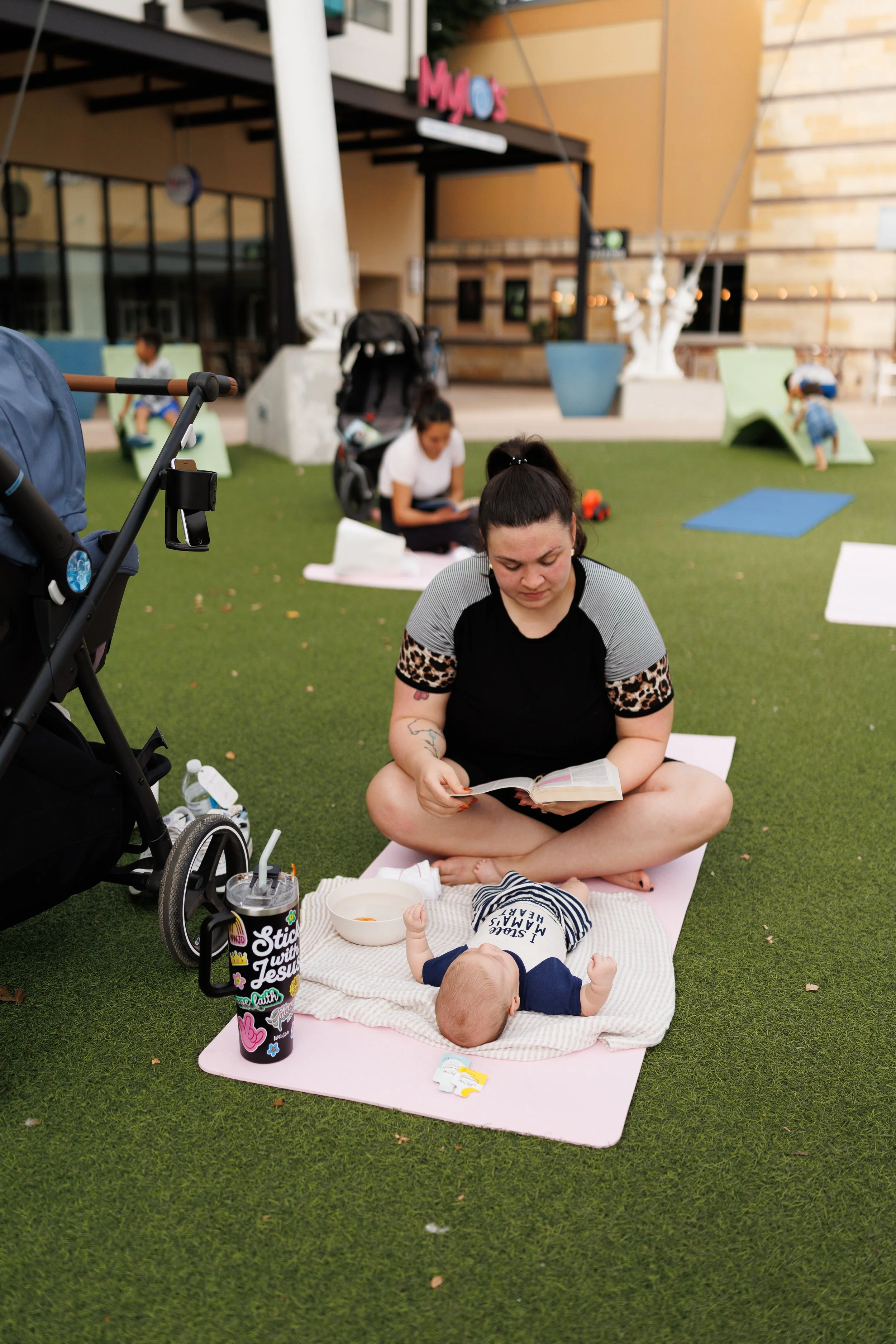
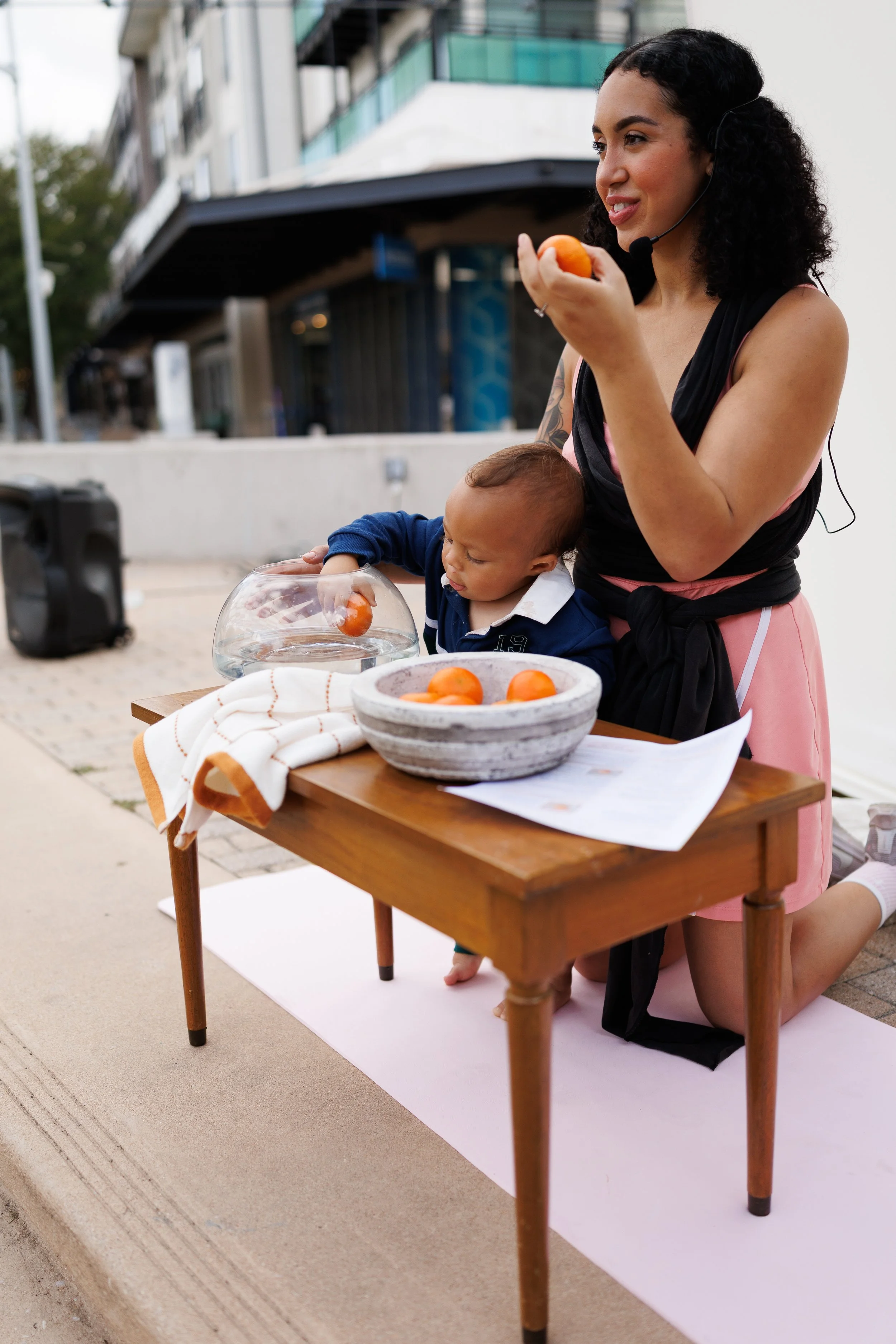
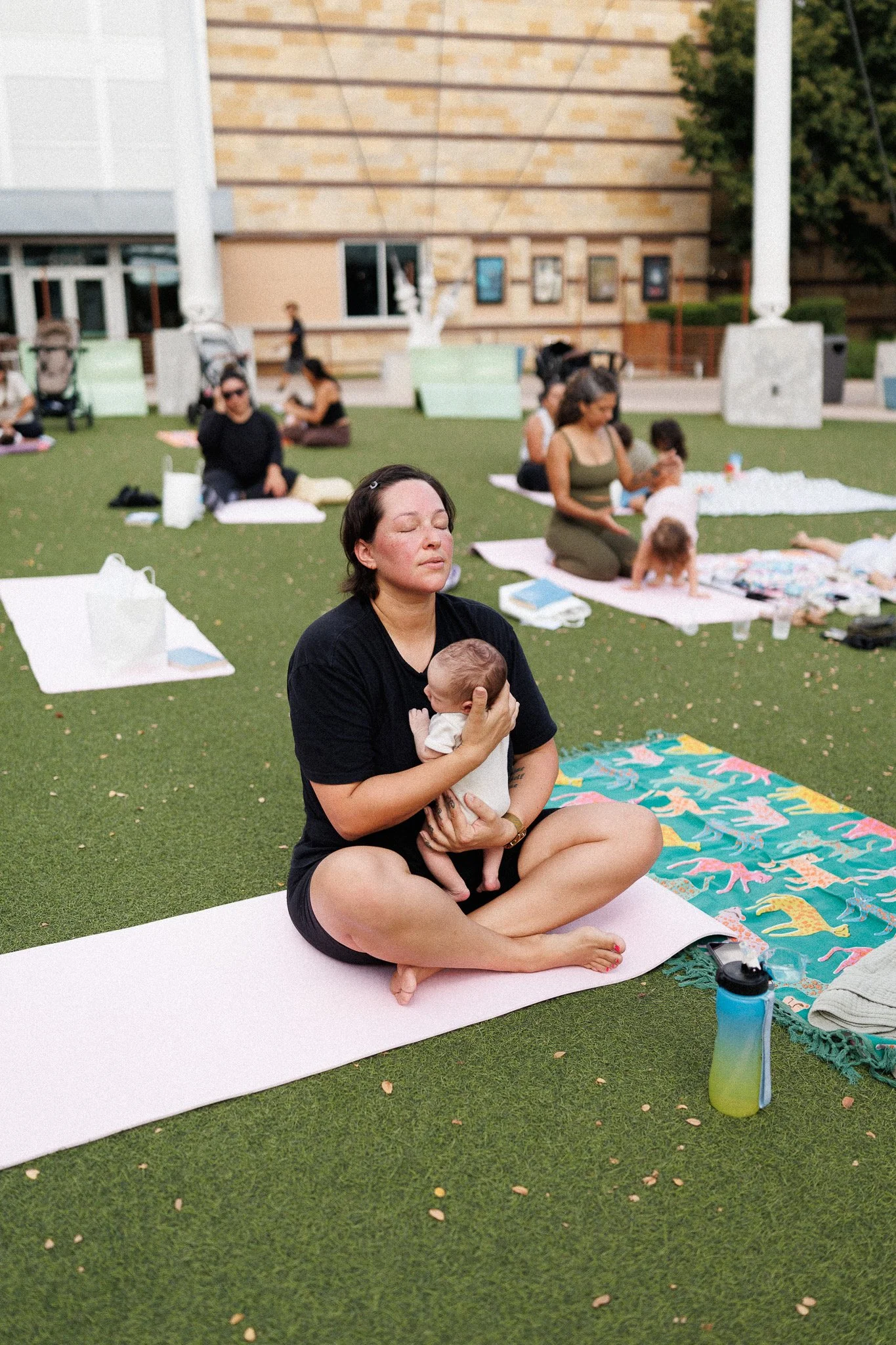
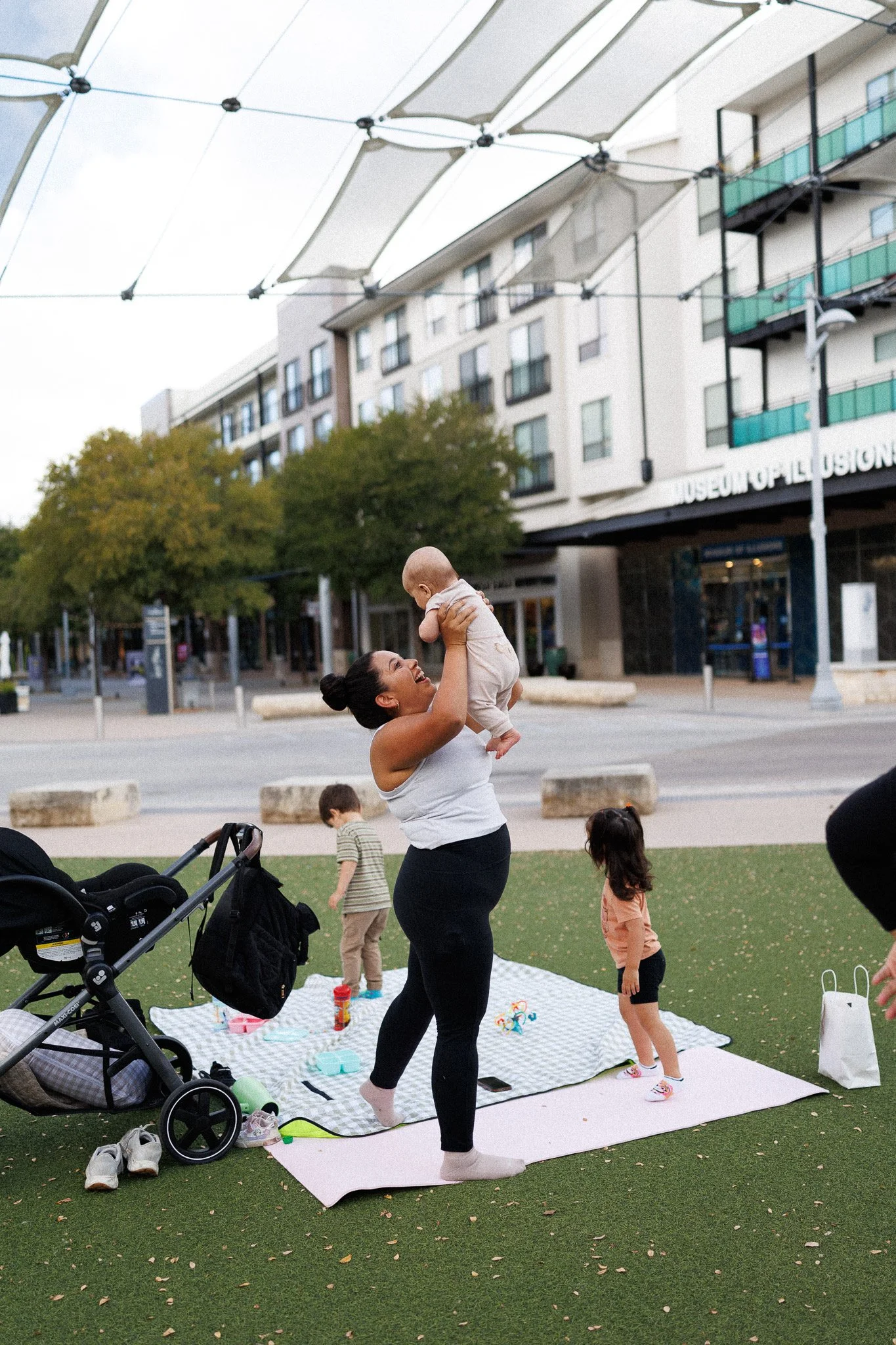
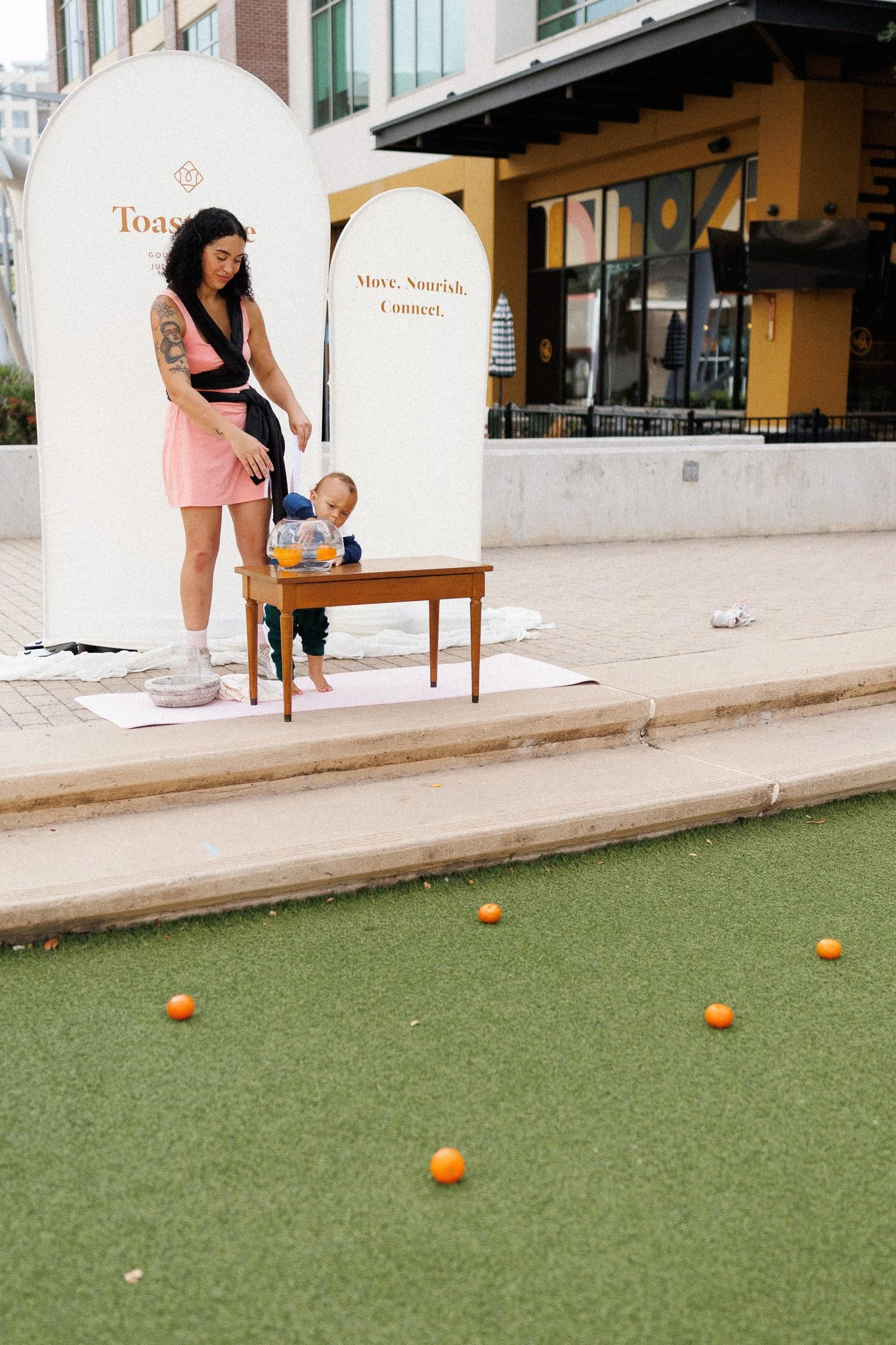
At our recent Stroller Steps + Scripture gathering at Toastique, we opened the Word together and spent time in Ephesians 6, exploring the armor of God.
There is something beautiful about sitting among other women, opening Scripture, and being reminded that following Jesus is not about pretending to have everything together. It is about continually turning toward Him, allowing His Word to shape us, and encouraging one another along the way.
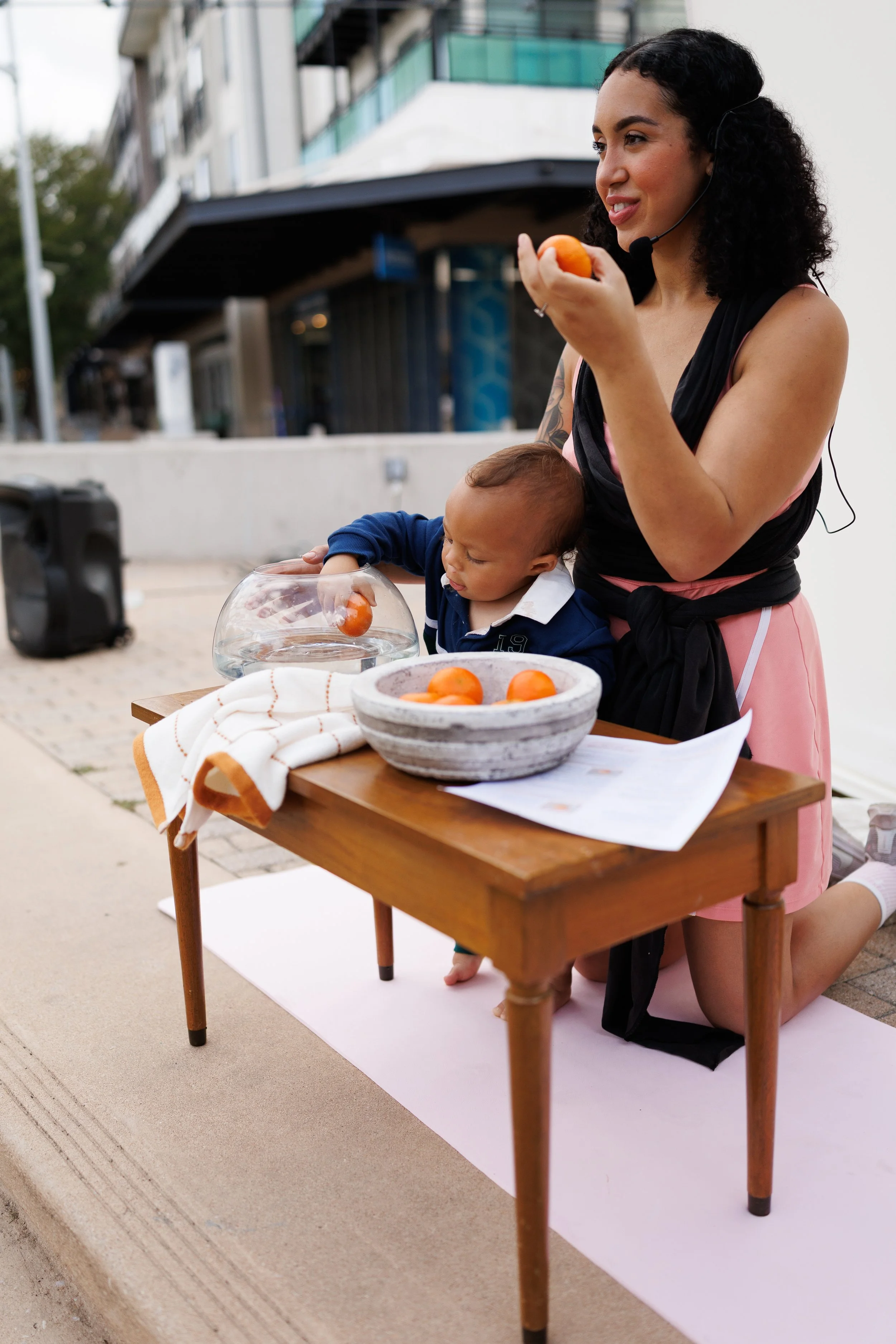
For our object lesson, we brought something simple to the table: two oranges and a bowl of water.
We placed a whole orange, with its peel intact, into the water. It floated. Then we placed a peeled orange into the bowl, and it sank.
It was such a simple demonstration, but it gave us a tangible picture to carry into our conversation about spiritual protection.
The orange peel changes the way an orange behaves in water. Of course, our faith isn’t a physical covering, and the armor of God isn’t a promise that we will never experience hardship. But the demonstration gave us a way to pause and consider what God has provided to equip us for the life of faith.
What are we carrying into our days?
What truths are shaping our thoughts?
What happens when we allow our minds to be led by frustration, comparison, assumptions, or fear rather than returning to what God says is true?
I found myself thinking about how often the real turning point in a difficult moment happens before anyone else even knows there is a struggle.
It happens in the quiet of our minds, in the interpretation we give an interaction, in the assumptions we make, and in the thoughts we choose to revisit.
And that is why I love where Paul begins.

“Be Strong in the Lord”
Paul writes:
“Finally, be strong in the Lord and in his mighty power.” — Ephesians 6:10 (NIV)
Read those words again.
Be strong in the Lord.
Not in our ability to manage every emotion. Not in our capacity to keep everyone happy. Not in our determination to become the most patient, organized, put-together woman in the room.
Our strength is in Him.
When I began recognizing the patterns in my own thoughts, I realized that simply telling myself to be more patient wasn’t enough. I could promise myself that tomorrow I would respond differently, only to find myself caught in the same cycle when the next difficult moment arrived.
I needed more than a resolution. I needed the Lord to help me see what I was believing and teach me how to respond in truth.
This is where Scripture becomes so personal.
In Romans 12:2, Paul calls believers to be transformed by the renewing of their minds. Transformation is not merely about changing an outward behavior while leaving the thoughts beneath it untouched. It involves learning to see and discern differently as our minds are renewed by God’s truth.
For me, that meant beginning to notice the space between what happened and the story I told myself about it.
My husband might forget something, and I could immediately interpret it as evidence that I was carrying everything alone. A child might interrupt me, and I could receive the interruption as one more demand rather than simply a child needing his mama. A messy room might become a judgment about my ability to keep up rather than a normal part of a home where little people live.
Sometimes my concerns were pointing to real needs that deserved attention. I might genuinely need more support, a conversation with my husband, or a little breathing room.
But sometimes, I was adding assumptions to an already difficult moment. I was allowing my thoughts to turn frustration into resentment before I had even stopped to ask what was true.
The Lord was inviting me to pay attention.
And there is so much hope in that invitation.
We are not helpless before every thought that enters our minds. We can learn to recognize a pattern, bring it before God, examine it in light of Scripture, and choose a response that better reflects His truth.
We may not change every habit in a single morning. But we can begin with the next thought, the next conversation, the next opportunity to respond with grace.
We can learn to depend on His strength right there.

The Belt of Truth
“Before You Believe the Story in Your Head”
Paul tells us to stand firm with the belt of truth buckled around our waist (Ephesians 6:14).
Truth is foundational to the armor. And in everyday motherhood, I think one of the most practical questions we can learn to ask is this:
Is what I am telling myself actually true?
Not simply, Does it feel true? Not, Can I find evidence to support my frustration? But, Have I stopped to examine this thought in the light of God’s truth?
Imagine that your husband walks past a pile of laundry and makes a face as if he’s tired of seeing it for the 2nd day in a row.
The observation is simple: the laundry is still there.
But your mind may begin adding a story.
He never notices how hard I work. Doesn’t he see everything else I am doing. He doesn’t appreciate me.
Perhaps there is a larger conversation you genuinely need to have. You don’t have to dismiss that need or pretend that everything is fine.
But there is a difference between communicating a need and allowing an assumption to harden into resentment.
What if, instead of rehearsing the story all afternoon, you paused and asked the Lord to help you respond with both truth and grace? What if you approached your husband with an honest conversation rather than a conclusion you had already reached about his intentions?
The same is true with our children.
A child who interrupts us is not necessarily being inconsiderate. A toddler having a difficult moment is not necessarily trying to make our day harder. Sometimes children are simply being children, learning to navigate a world in which they have very little emotional regulation and a great deal to learn.
And sometimes we are simply tired.
Recognizing that can change the way we respond.
Philippians 4:8 calls us to dwell on what is true, honorable, just, pure, lovely, commendable, excellent, and worthy of praise. This doesn’t mean we ignore difficult realities or force ourselves to think positively about everything. It means we intentionally direct our attention toward what is true and worthy of our consideration.
Mama, you can be honest about what is hard without rehearsing every frustration until it becomes the lens through which you see your family.
You can acknowledge a need without assuming the worst about someone’s heart.
You can notice a difficult thought without allowing it to become the authority over your next response.
And when a thought is not true, you can begin learning to replace it with what is.
That is one way we practice putting on the belt of truth in the ordinary moments of our lives.

The Breastplate of Righteousness
Let Grace Change the Way You Respond
The breastplate protected a soldier’s vital organs. Paul uses this image to describe another part of the armor God provides.
For us, righteousness is not a performance we maintain to prove that we are good Christian women. Our standing before God rests on Christ. And because we belong to Him, we are called to live in a way that reflects His righteousness.
This matters in motherhood because there are moments when our emotions feel so justified that we stop examining our responses.
We may be tired. We may have asked for help several times. We may feel unseen or overwhelmed. Those feelings deserve to be acknowledged.
But being overwhelmed does not give us permission to wound the people we love.
I had to become more honest with myself about that distinction. There’s something I often say to my daughters “you may be upset, but you may not be mean.”, I also need that reminder.
I could acknowledge that I was having a difficult day without allowing my frustration to determine how I spoke to my husband. I could recognize that I needed a moment without communicating to my children that their presence was a burden. I could ask for help without turning my unmet expectations into accusations.
And when I did respond poorly, I could take responsibility.
There is something beautiful about a home where repentance is not treated as humiliation, but as an opportunity for restoration. This is something I pray my children remember.
A mama can look her child in the eyes and say, “I am sorry I spoke to you that way. You did not deserve that. I was frustrated, but I should have spoken more gently. Will you forgive me?”
She can have an honest conversation with her husband, acknowledge her part in a disagreement, and invite them both to work toward a better pattern.
That is not weakness.
It is the fruit of a heart that is willing to be taught.
The goal is not to become a woman who never makes a mistake. The goal is to become a woman who is increasingly willing to bring her heart before the Lord, receive His grace, and allow that grace to change the way she lives.

The Shoes of Peace
What Kind of Atmosphere Are We Cultivating?
Paul describes the feet as fitted with the readiness that comes from the gospel of peace (Ephesians 6:15).
The peace of the gospel begins with what Christ has done to reconcile us to God. We receive His peace, and from that place, we learn to carry His truth and grace into our relationships.
I have thought a lot about the atmosphere of a home.
Not whether every room is clean or whether every day is peaceful. With children, there will always be noise, messes, tears, and moments that require patience.
I mean the emotional atmosphere that grows from our repeated interactions.
Do our children feel safe coming to us when they have made a mistake? Can they tell us something difficult without immediately fearing our reaction? Do our conversations with our husbands leave room for honesty, or have we developed patterns of defensiveness and tension?
These are tender questions because none of us gets it right all the time.
But they are worth asking.
I realized I did not want my children to become experts at reading my facial expressions just to determine whether it was a good time to approach me. I didn’t want my husband to feel that he had to brace himself before bringing something to me. I wanted the people I loved to experience my home as a place where truth could be spoken and grace could be extended.
That kind of atmosphere doesn’t happen because a mother forces herself to be cheerful every day. Take it from me, that’s exhausting!
It grows through the small, repeated choices we make: listening before responding, taking responsibility when we are wrong, speaking honestly about our needs, offering affection, and learning to pause when our emotions are running ahead of us.
It also grows when we acknowledge that we cannot control every feeling or circumstance in our home. We can only take responsibility for our own choices and invite the Lord to work in us.
Romans 12:18 says, “If it is possible, as far as it depends on you, live at peace with everyone.” Notice the wisdom in those words. We are responsible for our part, but we are not responsible for controlling every other person’s response.
Mama, you can cultivate peace without carrying the impossible burden of making everyone happy.
You can be gentle without becoming silent about your needs.
You can pursue reconciliation without pretending that hurt never happened.
And you can begin creating a different pattern in your home, one ordinary interaction at a time.
The Shield of Faith
Trusting God With the Moment You Cannot Control
Paul tells us to take up the shield of faith, with which we can extinguish the flaming arrows of the evil one (Ephesians 6:16).
Faith does not mean that we never experience discouragement. It means we continue to trust the character of God when our feelings, circumstances, or fears threaten to pull us away from Him.
For me, this has meant learning to recognize the urge to control everything.
When the house feels chaotic, I want to make everything orderly. When a conversation feels uncomfortable, I want to settle it immediately. When I see a problem in my own behavior, I want to fix it all at once.
But transformation often happens through faithful, repeated surrender.
I can ask the Lord to help me recognize an unhelpful thought. I can practice responding differently. I can seek forgiveness when I fall short. I can ask my husband to work with me on a pattern that is affecting our marriage.
And I can trust that God is at work even while I am still learning.
Faith gives us room to grow without demanding instant perfection.
It reminds us that we are not responsible for manufacturing our own transformation. We are called to abide in Christ, obey His Word, and depend on His grace as we walk forward.
When the next difficult moment comes, you do not have to resolve every struggle in your heart before you can take a faithful step.
Sometimes the step is as simple as pausing before you answer.
Sometimes it is choosing to ask a question instead of making an accusation.
Sometimes it is putting your hand on your heart and praying, “Lord, help me see this clearly. Help me respond in truth.”
That is a meaningful place to begin.
The Helmet of Salvation
You Are Not Defined by the Pattern You Are Learning to Break
One of the most encouraging truths in the gospel is that our failures do not have to become our identity.
Perhaps you recognize yourself in my story. Perhaps you have noticed irritability shaping your marriage or the atmosphere of your home. Perhaps you have watched yourself repeat a response you promised you would change.
It can be discouraging to recognize a pattern, especially when the people you love are affected by it.
But recognition is not the end of the story.
In Christ, we are not left to define ourselves by our worst moments. We are invited into repentance, renewal, and a life that is continually being shaped by His grace.
The helmet of salvation reminds us to keep our hope anchored in what God has done for us.
You are not beyond the Lord’s help because you have struggled with your thoughts. You are not disqualified from growing because you have made mistakes. You do not need to hide from God until you have become the woman you hoped to be.
Come to Him now.
Let Him show you what needs to change. Let Him comfort you where you have been carrying shame. Let Him strengthen you to make things right where you have caused hurt.
And remember that growth is not measured only by whether you never struggle again. Sometimes it is seen in how quickly you recognize a pattern, how humbly you take responsibility, and how willingly you return to the truth.
You can become more patient without pretending you have always been patient.
You can cultivate a more peaceful home without pretending your home has always been peaceful.
You can grow in your marriage without believing that every difficult season means you have failed.
God’s grace does not excuse us from growth. It gives us a place to begin.

The Sword of the Spirit
Let His Word Interrupt the Pattern
The final piece Paul describes is the sword of the Spirit, which is the Word of God (Ephesians 6:17).
This brings us back to the thoughts that started my story.
I began recognizing that if I wanted to respond differently, I needed to do more than tell myself to stop being irritable. I needed to pay attention to the thoughts that were feeding my frustration and bring them before the Lord.
Scripture gave me a place to return.
James 1:19 tells believers to be quick to listen, slow to speak, and slow to become angry. Those words are simple enough to remember, but they ask something meaningful of us.
Before responding, can I listen?
Before speaking, can I pause?
Before allowing anger to lead, can I ask what is happening in my heart?
These questions are not meant to make us feel guilty for experiencing anger. Anger can signal that something needs attention. But it is not always a reliable guide for what we should say or do next.
God’s Word gives us a way to respond with wisdom rather than simply reacting from the strongest emotion in the room.
And we can bring Scripture into the places where we need it most.
When I am tempted to assume the worst, I can ask the Lord for wisdom.
When I am tempted to rehearse resentment, I can bring my concerns into honest prayer and seek a constructive way to address them.
When I have spoken harshly, I can return to the Lord, confess my sin, and make amends.
When I am discouraged by how slowly I seem to be changing, I can remember that spiritual growth is a process of learning to walk in obedience, not a demand to become perfect overnight.
The Word of God helps us recognize what is true and gives us wisdom for what to do next.
It does not remove our responsibility to practice new habits, communicate our needs, or seek help. Rather, it equips us to do those things with greater clarity, humility, and faith.
Equipped for the Every Day
I wish I could tell you that recognizing these patterns meant I never struggled with them again.
But that isn’t how growth works.
There are still moments when I have to stop and examine my thoughts. There are still times when I need to apologize, begin a conversation differently, or ask the Lord to help me respond with more grace.
The difference is that I am learning to pay attention.
I am learning that a thought does not have to become a belief, and a feeling does not have to determine my response.
I am learning to ask whether the story I am telling myself is true.
I am learning that the atmosphere of my home is shaped, in part, by the ordinary choices I make in my relationships.
And I am learning that I do not have to make these changes in my own strength.
This is why the armor of God matters so much in everyday life.
We need truth when our thoughts become tangled. We need righteousness when we must take responsibility. We need the peace of the gospel when tension begins to shape our relationships. We need faith when change takes time. We need the hope of salvation when we are tempted to define ourselves by our failures. And we need the Word of God to help us discern what is true and walk in obedience.
We need prayer, too, because we need the Lord Himself.
The armor is not a formula for a perfect home. It is God’s provision for a life of faith.
And perhaps the most beautiful place to begin is not with a promise that tomorrow we will do everything differently, but with a prayer that today, we will become a little more attentive to the One who is teaching us how to walk.

A Prayer for Our Homes and Our Hearts
Father,
Thank You for meeting us in the everyday places of our lives. Thank You for caring about our hearts, our thoughts, our marriages, and the little ones You have entrusted to us.
Help us recognize the thoughts that are shaping our responses. Give us wisdom to distinguish truth from assumption, conviction from condemnation, and a genuine need from a story we may have begun telling ourselves.
Teach us to be strong in You. Clothe us in Your truth and righteousness. Help us carry the peace of the gospel into our homes, trust You when change takes time, and remember the hope we have in Christ.
Where we have allowed resentment to grow, teach us to seek understanding and speak honestly. Where our words have wounded the people we love, give us humility to apologize and courage to make things right. Where we have been overwhelmed, help us receive the support we need rather than carrying everything alone.
Lord, make our homes places where grace and truth dwell together. Help our children know that they are loved even when they are corrected. Help our marriages grow in honesty, tenderness, and partnership. Help us become women who are quick to listen, slow to speak, and willing to let Your Word shape our lives.
And when we fall short, remind us that we can return to You. We do not have to hide from Your grace. We can confess, receive Your mercy, and take the next faithful step.
Equip us for the every day, Lord. Not so that we can appear strong, but so that we can live faithfully in the strength You provide.
In Jesus’ name, amen.

A Little Encouragement for the Mama Reading This
If any part of my story feels familiar, I hope you know that you are not alone in learning how to navigate your thoughts, your emotions, and the many demands of motherhood!
You do not have to change every pattern today.
Start by noticing. Bring what you notice before the Lord. Open His Word. Ask for wisdom. Have the conversation you have been avoiding. Apologize where you need to. Receive help where you need it.
And give yourself permission to keep growing.
The Lord is not asking you to carry your family in your own strength. He is inviting you to walk with Him as He teaches you to love, serve, speak, and live in truth.
May we be women who are rooted in His Word, clothed in His armor, and continually learning to reflect His grace in the places that matter most.
Keep walking with Jesus, mama. He is faithful in the every day.